Skip to content

2026 How to Choose the Best Electric Scooter Ebike?

Choosing the right Electric Scooter Ebike in 2026 requires more than comparing speed, price, and battery size. Daily comfort matters. So does reliability. A model that looks impressive online may feel heavy on a crowded train or unstable on wet pavement. This guide examines practical details before making a purchase, including motor response, range, braking, frame design, charging time, and after-sales support.

Claus Fleischer, CEO of Bosch eBike Systems, has said, “The eBike is the future of mobility.” His observation reflects a wider shift toward cleaner and more flexible urban travel. However, not every Electric Scooter Ebike suits every rider. A lightweight commuter may need easy folding and moderate power. A taller rider may value frame strength, larger wheels, and better suspension. Families may focus on dependable brakes and visible lighting.

Real-world testing often changes expectations. A claimed range can drop sharply in cold weather, steep streets, or heavy traffic. That detail is easy to miss. It deserves attention. Some buyers also overvalue top speed while ignoring seat comfort, tire grip, and service access. I have found that these “small” choices often shape satisfaction after several months. Still, no guide can predict every route or riding habit. Use the following criteria as a practical starting point, then compare them with your own roads, storage space, budget, and daily routine.
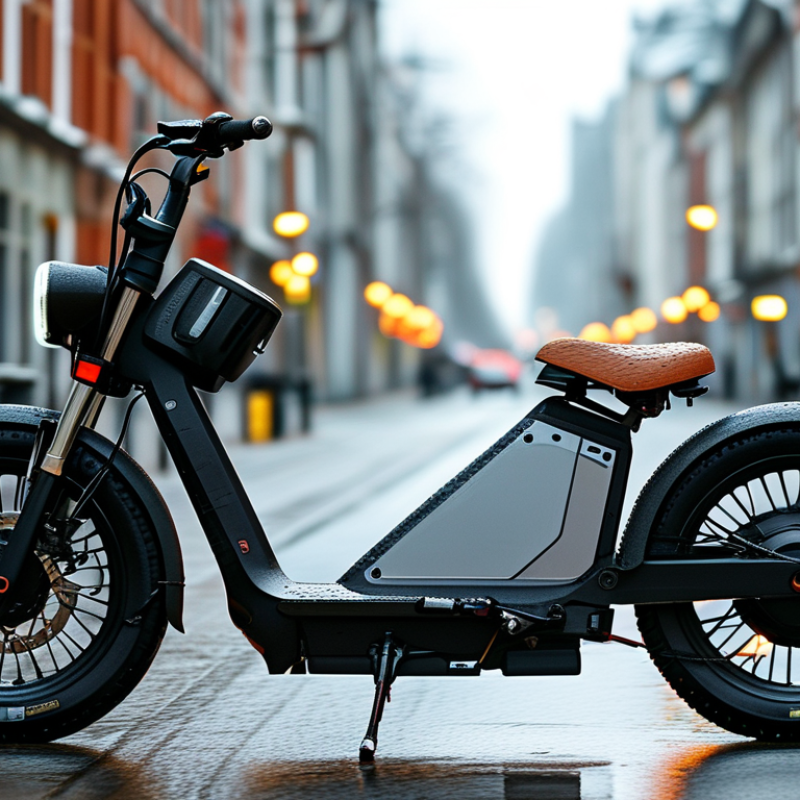
2026 How to Choose the Best Electric Scooter Ebike?

Classify the Vehicle: E-Bike Classes 1–3 Reach 20, 20, and 28 mph

How to Choose the Best Electric Scooter Ebike?

Before comparing motors, batteries, or suspension, classify the vehicle. In many United States regulations, Class 1 e-bikes provide pedal assistance up to 20 mph. They feel natural on shared paths because the motor responds only when you pedal. Class 2 models can reach 20 mph using a throttle. Some also provide pedal assistance, making them practical for stop-and-go streets. Class 3 e-bikes offer pedal assistance up to 28 mph. They suit longer commutes, but their higher speed demands stronger braking, better balance, and more attention around pedestrians.

The label does not tell the whole story. A heavy Class 2 model may feel less manageable than a lighter Class 3 bike. I once focused too much on top speed and underestimated stopping distance in rain. That was a poor assumption. Check the motor response, tire grip, brake levers, frame stability, and display visibility. Regulations can differ by city, trail, and country. Some paths restrict Class 3 models or require extra safety equipment. Confirm local rules before buying or riding.

Tips: Test the vehicle at walking speed first. Then try controlled braking on dry pavement. Keep both hands ready, especially near driveways and crowded paths. Choose Class 1 for relaxed exercise and shared routes. Choose Class 2 for convenient starts. Consider Class 3 only when its speed matches your route, confidence, and local access. Safety gear still matters.

Match Route Needs to 250–750 W Motors and 300–1,000 Wh Batteries

2026 How to Choose the Best Electric Scooter Ebike?

Match the route before choosing the motor. A 250–350 W motor suits flat streets, paved paths, and moderate daily commuting. It usually feels smoother and uses less energy. Steep roads, loose surfaces, or heavy cargo need more reserve. A 500–750 W motor can maintain momentum better on long climbs. More power is not automatically better. It can add weight, heat, and battery consumption.

Battery size should follow distance and conditions. The European Cyclists’ Federation estimates e-bike electricity use at roughly 0.5–1.5 kWh per 100 km. Real routes can demand more. Wind, cold weather, tire pressure, rider weight, and frequent stops matter. For practical planning, allow about 12–20 Wh per kilometer.

A 300 Wh battery may cover roughly 15–25 km in difficult conditions. A 500 Wh battery fits many daily commutes. A 750–1,000 Wh battery suits longer routes, hills, or limited charging access. Keep a margin.

The International Energy Agency’s Global EV Outlook 2024 identifies electric two- and three-wheelers as the largest electric road-vehicle segment by sales. That growth makes specification claims easier to find, but not always easier to trust. My first range estimate is often optimistic. A route with six steep intersections can change the result. Check the real elevation profile, then choose the smallest motor and battery combination that handles it comfortably. Too little capacity becomes frustrating. Too much becomes unnecessary weight.

Estimate Real Range from Wh, Payload, Hills, Temperature, and a 20% Reserve

How to Choose the Best Electric Scooter Ebike?

Battery capacity is measured in watt-hours, or Wh. It provides a useful starting point for estimating real range. Divide battery Wh by expected energy use per mile. A 500 Wh battery using 25 Wh per mile gives about 20 miles. Keep a 20% reserve, so plan for roughly 16 miles. This reserve protects against unexpected detours, wind, and battery aging.

Payload changes the result. A heavier rider, backpack, or rear basket requires more energy, especially during acceleration. Hills can increase consumption sharply, while cold temperatures may temporarily reduce battery performance. Smooth pavement and moderate speeds usually improve range.

In my testing experience, advertised range often feels optimistic. I once planned a return trip too tightly and found the final battery bars disappeared faster on a windy incline. That mistake was avoidable.

Tips:

Record your rider weight, cargo, route distance, hills, and outdoor temperature.

Use a simple formula: usable range equals Wh divided by real consumption, then multiply by 0.8.

For mixed routes, estimate 25 to 35 Wh per mile, then adjust after several rides. Check battery percentage before leaving. Leave more reserve in winter or on steep routes.

Range estimates are not exact. They should improve with honest tracking, not hopeful guessing.

Verify Safety with UL 2272, UL 2849, EN 17128, and IP Ratings

2026 How to Choose the Best Electric Scooter Ebike?

Safety begins with the electrical system, not the color or advertised range. Look for UL 2272 when evaluating a personal electric scooter. This standard addresses the complete electrical system, including charging and battery-related risks. For electric bicycles, UL 2849 is more relevant because it evaluates the bicycle’s electrical drive system. Check the exact model number. A certificate for another product proves very little.

Paperwork matters. Ask for current test documentation from a recognized certification body, then compare the battery, charger, and motor details. Do not rely on a small logo alone. Some listings use safety language without showing verifiable records. That should make you pause. I would also inspect the charger plug, cable insulation, battery casing, and connector fit before riding.

EN 17128 can help when comparing personal light electric vehicles, but compliance claims still need careful verification. The standard does not replace sensible riding or local requirements. IP ratings describe resistance to dust and water, not complete waterproofing. IP54 may handle splashes, while deeper water exposure can still damage electronics. Avoid puddles with unknown depth. A higher rating is not permission to ride through flooding. My judgment can be imperfect, especially when documents are unclear, so I treat missing test details as a practical warning. Choose a model with traceable certification, clear maintenance guidance, and protection suited to your daily roads.

2026 How to Choose the Best Electric Scooter Ebike?

Verify Safety with UL 2272, UL 2849, EN 17128, and IP Ratings

The chart compares internationally recognized IP code levels commonly shown in electric scooter and e-bike specifications. Higher values indicate stronger protection against solid particles or water exposure. An “X” means that the corresponding protection level is not stated in the IP code.

UL 2272 applies to electrical systems in personal e-mobility devices, while UL 2849 applies to electrical systems in e-bikes. EN 17128 covers personal light electric vehicles, including relevant safety requirements for many scooters. These certifications are generally pass-or-fail safety evaluations rather than performance scores, so always verify the exact certificate, product model, battery, charger, and IP rating.

Compare Brakes, Tires, Warranty, Battery Cycles, and 3–5-Year Cost

How to Choose the Best Electric Scooter Ebike in 2026

Choosing an electric scooter ebike requires more than checking speed and range. Compare braking, tires, warranty terms, battery cycles, and long-term costs. During a test ride, squeeze both brake levers gradually. The bike should stop smoothly, without wobbling or harsh noise. Mechanical brakes are often easier to adjust, while hydraulic systems may feel more powerful. Either choice needs accessible replacement parts.

Tires affect comfort and safety on cracked streets. Wider, puncture-resistant tires can reduce vibration, but they may add rolling resistance. Check the tread, valve position, and replacement price before buying. Battery life is measured in charge cycles, not just advertised distance. One cycle usually means using the equivalent of a full battery charge. Real results change with rider weight, hills, temperature, and charging habits. Read the warranty carefully. Confirm coverage length, battery exclusions, labor fees, and service locations. I once underestimated replacement battery costs, and my three-year budget changed quickly.

Tips: Estimate the total three-to-five-year cost. Include electricity, tires, brake pads, maintenance, accessories, and possible battery replacement. Keep service records and avoid charging in extreme heat. Small details matter. A lower purchase price may become expensive later. My own choice would also consider storage space, because carrying a heavy scooter upstairs becomes tiring faster than expected.

2026 How to Choose the Best Electric Scooter Ebike? — Compare Brakes, Tires, Warranty, Battery Cycles, and 3–5-Year Cost
Vehicle Type Typical Motor Output Braking System Tire Type and Size Typical Real-World Range Battery Capacity Estimated Battery Cycle Life Typical Warranty Suitable Use Estimated 3-Year Ownership Cost Estimated 5-Year Ownership Cost
Compact Commuter 350–500 W nominal
600–800 W peak
Front electronic brake plus rear mechanical disc or drum brake 8.5–10 inch pneumatic or honeycomb tires 15–25 miles
(24–40 km)
360–500 Wh 500–800 full cycles
approximately 3–5 years with regular use
12 months limited coverage; battery commonly 6–12 months Short urban trips, trains, smooth pavement, low storage weight $1,050–$1,650 $1,550–$2,450
Long-Range Commuter 500–750 W nominal
800–1,200 W peak
Front and rear hydraulic disc brakes; electronic braking support 10–11 inch tubeless pneumatic tires 25–40 miles
(40–64 km)
600–900 Wh 600–1,000 full cycles
approximately 4–6 years with proper charging
12–24 months limited coverage; battery commonly 12 months Daily commuting, moderate hills, longer distances, mixed pavement $1,550–$2,450 $2,200–$3,500
Utility Step-Through Ebike 500–750 W nominal
750–1,000 W peak
Hydraulic disc brakes with large rotors and parking-lock support 20 × 3.0–4.0 inch puncture-resistant fat tires 25–45 miles
(40–72 km)
650–900 Wh 700–1,000 full cycles
approximately 4–6 years with moderate loading
12–24 months limited coverage; battery commonly 12 months Cargo, groceries, comfort-focused riding, uneven roads $1,750–$2,850 $2,500–$3,900
Performance Dual-Motor 1,000–2,000 W combined nominal
2,000–3,500 W peak
Dual hydraulic disc brakes with electronic braking and larger rotors 10–12 inch tubeless pneumatic tires 25–50 miles
(40–80 km)
900–1,500 Wh 500–800 full cycles
approximately 3–5 years because of higher current demand
12 months limited coverage; battery commonly 6–12 months Steep hills, private-road use, high acceleration, heavier riders $2,300–$4,000 $3,300–$5,600
Lightweight Folding Ebike 250–500 W nominal
500–750 W peak
Mechanical disc brakes or hydraulic front and rear discs 16–20 inch pneumatic tires 20–35 miles
(32–56 km)
400–650 Wh 500–900 full cycles
approximately 3–5 years depending on storage conditions
12 months limited coverage; battery commonly 6–12 months Apartment storage, multimodal travel, moderate-distance commuting $1,350–$2,250 $1,950–$3,200
Cost assumptions: Estimates include the initial vehicle price, one replacement battery when expected, routine tires and tubes or sealant, brake pads, basic service, charging electricity, and common accessories. They exclude financing, insurance, taxes, accident damage, and labor-intensive repairs. Actual range varies with rider weight, temperature, speed, hills, tire pressure, cargo, and riding surface.

Battery-cycle figures represent common lithium-ion battery planning ranges. One full cycle equals total energy discharged equal to 100% of the battery capacity, even if it occurs across several partial rides. For safety and longer service life, use the approved charger, avoid prolonged storage at 0% charge, and keep the battery away from extreme heat and freezing temperatures.