7 Tips for Buying Metal Dinner Plates in Bulk?
Buying Metal Dinner Plates in bulk sounds simple until quality, shipping, and daily use expose hidden costs. A low unit price may look attractive, yet thin plates can bend under buffet service. Poor polishing may leave sharp rims, uneven surfaces, or stains after repeated washing. These details matter in restaurants, hotels, schools, event venues, and catering operations.
This guide shares seven practical tips for evaluating bulk suppliers with greater confidence. It considers material grade, plate thickness, diameter, weight, finish, packaging, and replacement support. Food-contact suitability should be confirmed through reliable product documentation, not attractive photographs alone. Ask for samples. Test them with hot meals, commercial dishwashers, and ordinary handling before placing a large order. Small tests reveal expensive weaknesses.
Supplier experience also deserves close attention. A dependable manufacturer should explain production capacity, quality inspections, lead times, and shipping protection clearly. Request written specifications and compare the delivered sample with the promised standard. Some buyers focus too heavily on appearance. That can be a costly mistake. Scratch resistance, stacking stability, and easy cleaning often affect long-term value more than a mirror-like finish.
Bulk purchasing still involves judgment, and no checklist removes every risk. Measurements may vary slightly between production batches. Packaging can fail during transport. Even experienced buyers sometimes overlook storage space or replacement quantities. Careful questions, realistic testing, and transparent communication can reduce those problems. The right Metal Dinner Plates should support efficient service, safe handling, and consistent presentation without exceeding the operating budget.
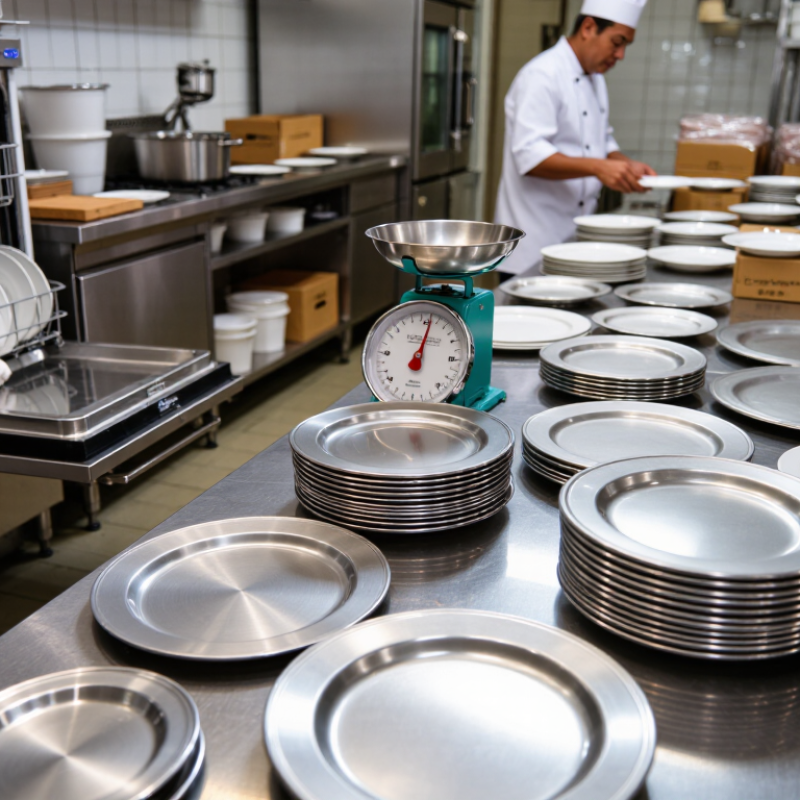
Define Your Bulk Metal Dinner Plate Requirements
Before buying metal dinner plates in bulk, define exactly how they will be used. A catering hall may need lightweight plates for fast service. A restaurant may prefer heavier plates that feel stable on a busy table. List the required diameter, depth, finish, color, and quantity. Also record your storage space and washing equipment. Small details matter.
Tips: Check whether the plates are designed for repeated food contact. Ask for material specifications, surface treatment information, and care instructions. Stainless steel, aluminum, and coated metals can perform differently under heat, moisture, and detergents. Do not rely only on attractive photographs. A sample can reveal sharp edges, uneven coating, or uncomfortable weight.
Set a realistic budget per plate, including shipping, replacements, and storage containers. Measure your existing table settings before ordering thousands. I once underestimated stacking height, and the plates occupied far more space than expected. That mistake was avoidable. Request a production sample and inspect several pieces, not just one. Look for consistent dimensions, smooth rims, firm bases, and clean finishes. If the plates will serve hot or acidic foods, test them under similar conditions first. Keep written requirements so every supplier receives the same information. Vague specifications often create expensive surprises.
Compare Metal Types, Grades, and Plate Durability
Buying Metal Dinner Plates in Bulk: Compare Metal Types, Grades, and Plate Durability
Tip 1: Identify the metal before comparing prices. Stainless steel 304, often called 18/8, offers strong corrosion resistance and a bright finish. Grade 316 adds molybdenum, which helps in salty or humid environments. Grade 430 costs less, but it generally resists corrosion less effectively. The 2023 World Stainless statistics recorded about 58.4 million tonnes of stainless steel production worldwide. That scale supports broad supply, but it does not guarantee equal quality.
Tip 2: Request the exact grade certificate. ASTM A240/A240M covers stainless steel plate and sheet requirements. Ask suppliers to identify thickness, alloy grade, and surface finish.
Tip 3: Check the gauge, not only the weight. A thin plate may bend near the rim after repeated washing.
Tip 4: Test a sample stack before ordering. Press the center, twist the rim gently, and inspect for sharp edges. Small flaws become expensive across thousands of pieces.
Tip 5: Consider aluminum for lighter catering loads, but inspect dents carefully.
Tip 6: Compare durability after repeated commercial washing, not after one showroom inspection. ASTM standards help, but actual performance depends on forming, polishing, and cleaning chemicals.
Tip 7: Confirm food-contact documentation and packaging protection. Foam separators can prevent scratches during transport. I have seen attractive finishes fail because plates rubbed together in transit. That detail is easy to overlook. A reflective surface may also show fingerprints more clearly, so durability should include appearance, handling, and replacement rates.
Evaluate Sizes, Designs, Finishes, and Food Safety
7 Tips for Buying Metal Dinner Plates in Bulk?
Buying metal dinner plates in bulk requires more than comparing carton prices. Measure your serving area, storage shelves, and dishwasher racks before requesting samples. Choose a diameter that fits your menu, not only your table. A 10-inch plate suits many meals, while deeper rims help contain sauces. Check the weight by hand. Lightweight plates reduce staff fatigue, but overly thin metal can bend during stacking. I once underestimated shelf depth; the cartons blocked a cabinet door.
Study designs under real lighting. Smooth surfaces support quick cleaning, while embossed patterns may trap food near the rim. Rounded edges feel safer during busy service. Avoid sharp decorative details. Ask for a sample set and test stacking, carrying, and heat retention. Finishes deserve equal attention. Polished metal shows fingerprints quickly, while brushed finishes hide daily marks better. Coated surfaces may look attractive, yet scratches can expose the underlying metal. That risk is easy to miss.
Food safety must guide the purchase. Request written information about the metal grade, surface coating, and intended food-contact use. Confirm that the finish resists corrosion after repeated washing. Inspect seams, rims, and dents before accepting a shipment. Do not rely on vague claims. Ask how the plates were tested and which cleaning temperatures they tolerate. Some suppliers provide clear records; others do not. If answers remain incomplete, pause the order. A lower price cannot repair food-contact risks or repeated service failures. Recheck your assumptions.
7 Tips for Buying Metal Dinner Plates in Bulk: Evaluate Sizes, Designs, Finishes, and Food Safety
| No. | Buying Factor | Recommended Options | Practical Bulk-Buying Benchmark | Food-Safety and Quality Check |
|---|---|---|---|---|
| 1 | Choose the Correct Diameter | 7–8 in / 18–20 cm Side plate, dessert plate, or child-size service 9–10 in / 23–25 cm Standard dinner plate 11–12 in / 28–30 cm Large entrée or buffet plate | Select the size according to portion size, tray dimensions, storage racks, and dishwasher capacity. For general meal service, a 9–10 inch plate is the most versatile format. | Confirm that the usable food area is large enough to prevent food from touching decorative rims, painted borders, or unverified surface treatments. |
| 2 | Match Shape and Design to Use | Round plates support even stacking and conventional table settings. Square or rectangular plates offer a modern presentation but generally require more storage space. | Compare the full outside dimensions, not only the stated diameter. Check stack height and the number of plates that fit on each shelf or trolley. | Prefer smooth, continuous surfaces without deep grooves, sharp corners, exposed welds, or hollow areas that can trap food residue during washing. |
| 3 | Select a Suitable Metal | 304 stainless steel General-purpose food service and everyday dining 316 stainless steel Higher resistance for salty, acidic, or coastal environments Aluminum Lightweight service when the surface is properly finished | Request the material grade, material declaration, and product specification sheet before placing a large order. Do not rely on appearance alone to identify stainless steel. | For stainless steel, verify that the food-contact surface is corrosion-resistant and free from rust, pitting, metallic flakes, and persistent discoloration. |
| 4 | Evaluate Thickness and Durability | Use a stable, rigid construction with a rolled or reinforced rim. Avoid plates that flex excessively under normal serving loads. | Compare sample weight, rim strength, flatness, and resistance to bending. A heavier plate is not automatically better; excessive weight can increase handling and shipping costs. | Inspect the rim and underside for burrs, sharp edges, cracks, loose particles, or incomplete polishing that could injure users or retain contaminants. |
| 5 | Choose the Right Finish | Mirror polish Bright appearance and easy visual inspection Satin finish Reduced glare and less noticeable light scratching Brushed finish Practical appearance for frequent service | Request a production sample and compare surface uniformity under bright light. Specify whether the finish must be suitable for commercial dishwashing. | The food-contact surface should be smooth, non-flaking, and easy to clean. Avoid unverified coatings or finishes that can peel, chip, or transfer color to food. |
| 6 | Verify Food-Contact Compliance | Obtain written documentation covering the exact plate material, finish, coating, and intended food-contact use. Requirements vary by destination market. | Keep the specification sheet, test reports, batch information, and care instructions with the purchasing records. Confirm compliance before approving the full bulk quantity. | Check applicable food-contact rules in the sales market, such as relevant U.S. FDA requirements or European Union food-contact framework requirements. Documentation should match the supplied product. |
| 7 | Test Cleaning, Stacking, and Delivery | Test hand washing, commercial dishwashing, drying, stacking, and repeated handling. Confirm that plates remain flat and do not lock together tightly. | Approve a pre-production sample, define acceptable defect limits, and inspect packaging for edge protection. Include spare units in the order for expected handling damage. | After washing, check for rust spots, detergent residue, coating changes, warping, sharp edges, and odor. Do not use plates that show corrosion, peeling, or structural damage. |
Purchasing note: Product suitability depends on the exact alloy, finish, coating, manufacturing process, cleaning chemicals, and destination-market regulations. Always validate a production sample and the supplier’s current food-contact documentation before approving a bulk shipment.
Check Suppliers, Pricing, Minimum Orders, and Customization
7 Tips for Buying Metal Dinner Plates in Bulk
Buying metal dinner plates in bulk requires more than comparing catalog prices. Ask suppliers about material grade, thickness, weight, and surface treatment. Food-contact documentation and recent test reports can reveal whether the plates suit daily service. Request physical samples before approval. A plate may look polished online but feel sharp, unstable, or too light in hand. Check stacking space, rim strength, and resistance to dents, stains, and repeated washing.
Small details matter.
Pricing should include packaging, tooling, inspection, freight, and possible import charges. Ask for tiered quotations at several quantities. A low unit price may hide expensive shipping or excessive packaging. Confirm the minimum order quantity and whether mixed sizes or finishes count separately.
Some suppliers accept a smaller trial order at a higher price. That can reduce risk. My early purchasing spreadsheet missed inner-carton costs, which changed the final budget more than expected.
Customization needs clear drawings and written approval. Confirm dimensions, logo placement, color, finish, and allowable measurement differences. Ask who owns the tooling and how replacement orders will match the approved sample. Production timing should include sampling, revisions, manufacturing, and inspection.
Use a pre-shipment checklist with photos and measured samples. Verify the supplier’s factory capacity, quality process, communication speed, and references. Do not rely on promises alone. A signed specification is safer than a confident message.
Mistakes still happen, especially with color and edge profiles, so leave time for correction.
Review Samples, Packaging, Shipping, and Quality Policies
7 Tips for Buying Metal Dinner Plates in Bulk?
Begin with physical samples, not catalog photos. Check the plate’s weight, rim smoothness, balance, and surface finish. Stack several samples together. Uneven rims can create unstable piles and damaged edges. Test them with warm food and ordinary washing routines. Look for discoloration, loose coatings, or lingering odors. Request material details and food-contact documentation when relevant.
Packaging deserves the same attention. Ask how many plates fit inside each carton. Inspect the cushioning between rims and the strength of corner protection. A carton may look secure but fail during handling. Request photos of packed cartons before production. Include carton dimensions and gross weight in your shipping estimate. These details affect warehouse space, unloading equipment, and freight costs.
Shipping terms should state the dispatch window, inspection point, and damage-reporting process. Confirm who handles replacement claims for cracked or badly scratched plates. Read the quality policy carefully. It should define acceptable color variation, dents, coating flaws, and quantity shortages. Set a written inspection standard before payment. A small sample approval does not guarantee every production unit. That is an uncomfortable limitation. Random checks help, but they cannot replace clear accountability. Keep records of approvals, packing photos, invoices, and delivery conditions. These simple records support calmer decisions when something goes wrong.
7 Tips for Buying Metal Dinner Plates in Bulk
This chart shows a practical evaluation-weight model for bulk purchasing. Review product samples first, then compare material quality, packaging protection, shipping conditions, quality policies, minimum order quantity, and customization requirements before placing an order.