7 Lacrosse Sportswear Buying Tips for Global Buyers
Buying Lacrosse Sportswear across borders requires more than comparing catalog prices. A jersey may look durable online, yet its mesh can feel rough after repeated washing. Stitching, stretch, ventilation, and protective fit deserve close attention. Global buyers must also examine fabric composition, size grading, colorfastness, and production consistency. These details affect athlete comfort, team identity, and long-term purchasing value.
This guide presents seven practical buying tips for international sourcing. It covers supplier verification, product specifications, sampling, customization, quality control, packaging, and delivery planning. Ask for recent factory images, test reports, production samples, and clear measurement charts. Check whether the supplier can repeat the same colors across different batches. Small differences matter. A navy jersey can become noticeably lighter under stadium lights. Buyers should confirm labeling, material claims, and applicable market requirements before shipment. Professional suppliers welcome these questions and explain their limits clearly. That behavior is useful evidence, not a guarantee. No checklist is flawless. A sample may pass inspection while bulk production still reveals loose threads or uneven logos. Build inspection points into the agreement, and keep written records for every approval. Experienced buyers also leave time for corrections, customs procedures, and unexpected delays. Reliable Lacrosse Sportswear sourcing depends on evidence, communication, and thoughtful risk control. The cheapest offer may not be the most economical choice. Performance comes first.
Assess Demand Across 90+ World Lacrosse Member Nations and Regional Markets
Global lacrosse demand needs more than one country’s sales history.
World Lacrosse reports more than 90 member nations, but participation depth varies sharply by region. Buyers should map school programs, clubs, universities, and national-team calendars in each market.
Do not treat Europe, Asia-Pacific, and North America as one customer group.
Check seven practical signals before ordering:
- player registrations
- club density
- seasonal weather
- import lead times
- local sizing
- price sensitivity
- replacement frequency
The Sports & Fitness Industry Association’s 2024 Topline Participation Report tracks lacrosse participation within U.S. team sports, offering useful direction for North American demand. However, U.S. data cannot predict demand in developing markets.
Demand varies. Validate locally.
Use regional samples before committing to large quantities. Test mesh ventilation in humid markets, thermal layers in colder regions, and youth sizes where school participation is strong.
Grand View Research valued the global sports apparel market at approximately USD 248.27 billion in 2023, with continued growth forecast through 2030.
That figure supports category momentum, not guaranteed lacrosse sales. My own early forecasts often overvalued tournament demand and undervalued everyday training wear.
Buyers should compare sell-through, not just inquiries. Record color preferences, sleeve choices, fabric complaints, and return reasons by market.
A small pilot may reveal more than a confident spreadsheet.
Set Safety Requirements with NOCSAE ND200 Helmet Certification Standards
For global lacrosse buyers, helmet safety should guide every sportswear purchasing decision. NOCSAE ND200 provides a recognized performance framework for newly manufactured lacrosse helmets. It addresses impact protection and related helmet performance requirements. However, compliance is not a substitute for careful supplier verification.
Ask suppliers for the exact ND200 edition, model identification, production date, and supporting test documentation. Check whether the certification statement matches the helmet’s shell, facemask, chin strap, and retention system. Request recent inspection records, not only a general factory certificate. A reliable supplier should explain testing methods clearly and provide traceable batch information. Small details matter.
Inspect random samples before shipment. Look for unclear labels, loose hardware, sharp edges, damaged foam, or inconsistent sizing. Confirm that replacement parts are compatible and that no unauthorized modifications are needed. Regional competition rules may add requirements beyond ND200, so verify the destination market separately. NOCSAE compliance claims can also change with revised standards. Keep written evidence.
A practical warning: paperwork can look complete while physical quality varies between batches. We have seen buyers focus on logos and overlook strap adjustment. That is a costly mistake. Test fit with real users, including different head shapes, and record discomfort or movement. A helmet that meets a stated standard still needs correct fitting, storage, and regular inspection. Safety decisions deserve both technical evidence and honest reconsideration.
Select Fabrics Using AATCC 195 Testing and UPF 50+ UV Protection
Global lacrosse buyers should judge fabric performance beyond color, price, and catalog claims. Players sprint, collide, and sweat heavily during long matches. A suitable textile must move moisture, dry quickly, and tolerate repeated washing. AATCC 195 testing measures liquid moisture management through absorption, spreading, and drying behavior. Request the complete test report, not only a supplier’s performance statement.
Check whether the tested fabric matches the proposed production fabric. Confirm its fiber blend, weight, knit structure, and finishing process. Compare moisture spreading speed across several fabric samples. Inspect seams and mesh panels for ventilation. Test stretch recovery after repeated movement. Review colorfastness and shrinkage results after washing. These details often reveal practical weaknesses.
UPF 50+ protection matters during outdoor tournaments.
It indicates very limited ultraviolet transmission through the tested material. Verify the result after stretching, wetting, and laundering when applicable. Darker or tighter fabrics may perform better, but assumptions can mislead. Ask for a recognized laboratory report and its testing conditions. I would also wear-test the garment under direct sun. Lab performance cannot fully predict comfort on a humid field. Some fabrics pass testing yet feel heavy, clingy, or slow to dry. That gap deserves honest review. Evaluate fit, ventilation, and protective coverage together before placing a large order.
Validate Fit and Durability Through ISO 105-C06 Wash Testing
Global lacrosse buyers need more than a size chart. A jersey may fit perfectly before washing, then tighten across the shoulders after repeated laundering. Players notice quickly. Comfort matters during sprinting, checking, and stick movement.
ISO 105-C06 provides a controlled way to assess color fastness during domestic or commercial washing. Ask for the exact test method, wash temperature, detergent, and cycle details. These conditions can influence the result. Request color-change and staining ratings, including evidence from contrasting panels, numbers, and trim. A practical review should also compare garments before and after washing. Measure chest width, body length, sleeve length, and hem twisting. Small changes can affect movement.
However, ISO 105-C06 does not prove complete garment durability. It mainly evaluates color resistance, not seam strength, fabric abrasion, or full dimensional stability. Pair the report with shrinkage testing and repeated-use inspections. Check whether mesh panels remain flat and whether elastic cuffs recover their shape. A passing result is not a perfect garment. I would still test a production sample, not only a laboratory swatch. Supplier records can be useful, but sample-level evidence is more convincing. Some buyers overlook this step when deadlines become tight. That shortcut may create costly replacements later.
Compare Suppliers by MOQ, Incoterms 2020, Lead Time, and Landed Cost
7 Lacrosse Sportswear Buying Tips for Global Buyers
Compare Suppliers by MOQ, Incoterms 2020, Lead Time, and Landed Cost
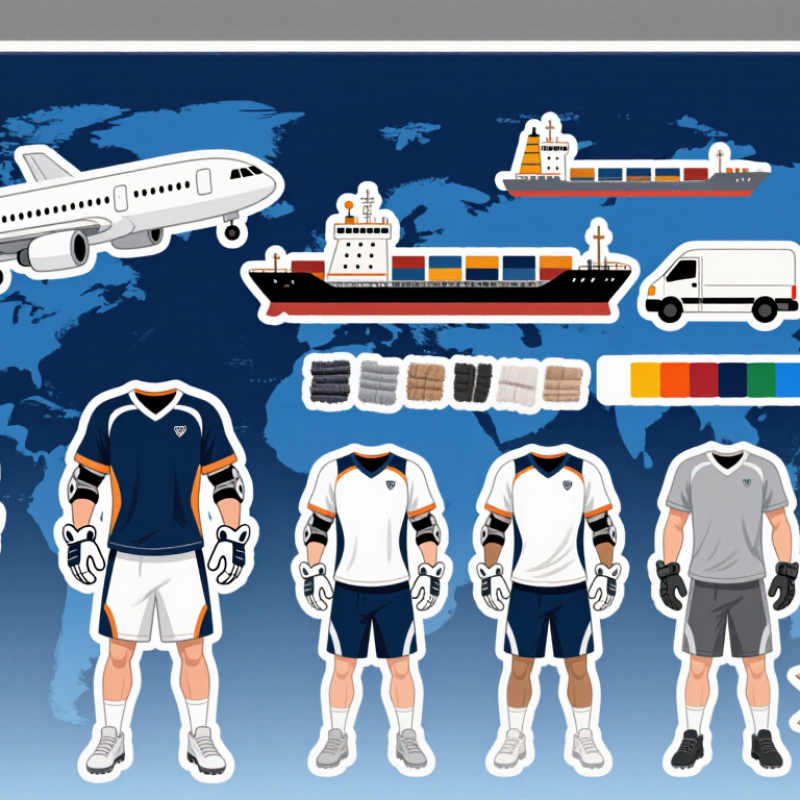
Global lacrosse buyers should compare more than unit prices. A supplier offering $18 jerseys may become more expensive after freight, duty, insurance, and handling. UNCTAD reports that maritime shipping carries over 80% of global merchandise trade. Port delays can therefore affect your launch date. Ask for MOQ by size, color, and design. A low total MOQ may hide high color-level minimums. Tip: Request a sample size set before approving production.
Clarify Incoterms 2020 in every quotation. Under FOB, the buyer normally manages main carriage and insurance. Under DDP, the supplier manages delivery and import obligations, but pricing may include a larger risk margin. Confirm the named place, transfer of risk, and documentation responsibility. Tip: Compare FCA, FOB, and DDP using the same shipment weight. The World Bank’s 2023 Logistics Performance Index shows major differences in customs and delivery performance between countries.
Measure lead time from approved artwork, not from deposit payment. Add time for fabric booking, embroidery, inspection, and port movement. Industry purchasing reports commonly identify freight volatility and inventory delays as major sportswear risks. A spreadsheet helps, but it can still be wrong. Recheck fuel surcharges and exchange rates before ordering. Tip: Request a production calendar with one buffer week. Calculate landed cost per sellable item, including defects and replacement units. A cheaper supplier is not always cheaper.
This anonymized planning benchmark compares typical lacrosse sportswear sourcing options by minimum order quantity, production lead time, and estimated landed cost per set. Lower landed cost is not always the best choice: buyers should also confirm fabric specifications, sample approval, quality control, payment terms, and the selected Incoterms® 2020 rule. FOB usually gives the buyer more control over freight, while CIF and DDP can simplify logistics but may include less transparent charges.
Values are practical apparel-sourcing benchmarks for buyer planning; final MOQ, lead time, freight, duties, taxes, and landed cost must be verified through a supplier quotation and destination-specific calculation.
