Skip to content

10 Tips for Buying Custom Table Legs

Buying Custom Table Legs can transform an ordinary tabletop into a stable, distinctive piece of furniture. The right legs influence height, balance, comfort, and visual weight. They also determine whether your table feels refined or slightly awkward.

Charles Eames, a respected furniture designer and architect, said, “The details are not the details. They make the design.” His observation applies directly to table legs. A small difference in steel thickness, wood grain, or mounting position can change the entire table. Before choosing a style, measure the tabletop, confirm its weight, and consider how people will use the finished piece. A dining table needs comfortable clearance. A desk needs dependable support. A narrow console may require stronger anti-tip planning.

Material matters. Powder-coated steel offers a clean, durable finish, while solid wood adds warmth and visible craftsmanship. Check the leg dimensions, mounting plates, screw compatibility, and floor-protection options. Adjustable feet can help on uneven floors. They are easy to overlook. That can become an annoying daily problem.

This guide, “10 Tips for Buying Custom Table Legs,” focuses on practical decisions rather than impressive photographs alone. You will compare proportions, load capacity, finishes, installation methods, and supplier reliability. Some choices may still involve compromise. A delicate appearance can reduce strength. A heavy-duty design may look too industrial. Good buying decisions come from examining those tensions honestly, not hiding them behind attractive marketing.
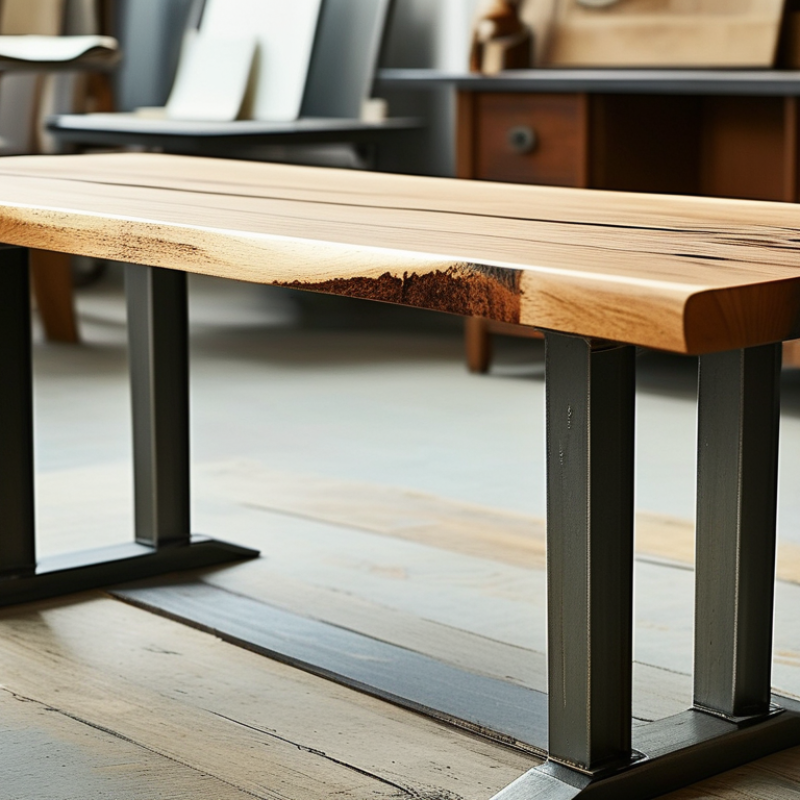
10 Tips for Buying Custom Table Legs

Define Your Table’s Purpose, Style, and Required Leg Dimensions

Buying custom table legs starts with purpose, not appearance. A dining table needs stable support for daily meals, homework, and occasional heavy serving dishes. A desk needs legroom, cable clearance, and comfortable working height. OSHA’s Computer Workstations eTool recommends a work surface that keeps elbows near 90 degrees. Most desks therefore sit around 28 to 30 inches high, including the tabletop. Measure your chair, floor, and tabletop before ordering. A beautiful leg can still feel wrong.

Style should support the room’s visual weight. Thick steel legs suit industrial interiors, while tapered wood legs soften smaller spaces. Measure the tabletop’s length, width, and thickness. Then calculate the leg height, apron clearance, and mounting position. Leave enough knee space at every seat. ANSI/BIFMA X5.5-2021 includes stability and strength tests for desk products, reminding buyers that appearance cannot replace performance. Ask the fabricator about load capacity, fasteners, floor adjusters, and finish durability.

Reports also reveal why planning matters. The 2024 Houzz & Home Study reported a median kitchen renovation spend of about $26,000 in the United States. Custom furniture decisions deserve similar care, even at a smaller budget. I once chose legs by visual proportion alone. The finished table looked elegant, but the wide supports restricted seating. That mistake was avoidable. Recheck every dimension, especially if the table will move between rooms. Supplier drawings may be incomplete. Request a scale sketch before production.

Choose Suitable Materials for Strength, Stability, and Appearance

10 Tips for Buying Custom Table Legs

Choose Suitable Materials for Strength, Stability, and Appearance

When ordering custom table legs, match the material to the tabletop’s weight and daily use. Solid steel supports heavy stone or hardwood surfaces with minimal flex. Aluminum is lighter, but may need thicker profiles for similar stability. Hardwood legs add warmth and can visually connect with the tabletop. They require careful sealing in humid rooms.

Do not judge strength by appearance alone. Looks can mislead. In my workshop experience, wide mounting plates reduce wobble more effectively than simply using thicker legs. Check the joint design, tube thickness, and expected load together. A dining table needs different support from a slim writing desk. Adjustable feet can compensate for uneven floors, especially on tile or old timber. However, poorly made adjusters may loosen over time.

Finish affects both appearance and service life. Powder-coated metal resists everyday scratches, while clear-coated wood reveals natural grain. Ask how the finish handles moisture, cleaning, and sunlight. Edges should feel smooth, not sharp. Measure the leg height after adding floor protectors and mounting hardware. I once allowed for the tabletop but forgot the protective pads, making the final table slightly too tall. That mistake was avoidable. Leave room for movement, knee clearance, and cleaning access. A reliable maker should explain load limits, tolerances, attachment methods, and maintenance requirements before production.

Confirm Measurements, Mounting Methods, and Compatibility

Before ordering custom table legs, measure the tabletop, not just the old legs. Record length, width, thickness, and the apron’s internal clearance. A 700-millimeter leg can feel wrong when the mounting plate adds 8 millimeters. Check the finished height from floor to tabletop. Standard dining tables usually sit near 740 millimeters, but chair height and user posture matter more than a catalog number. The U.S. Bureau of Labor Statistics’ 2023 Consumer Expenditure Survey placed household furnishings and equipment spending at roughly 2,000 dollars per consumer unit. That investment deserves accurate measuring.

Mounting compatibility is the quieter risk. Threaded inserts, wood screws, bolts, and surface plates require different substrates and tools. Mark every hole before drilling. A narrow plate may twist on a wide leg, while short screws can strip softwood. For stone, glass, or thin composite tops, confirm whether reinforcement is required. BIFMA performance standards emphasize stability, strength, and durability testing for furniture components; a decorative leg still needs a stable connection. Do not judge strength by appearance.

Calculate the load.

Add the tabletop, equipment, and realistic leaning pressure. Then divide the total across the legs, allowing a safety margin. Statista Market Insights estimated the global furniture market above 760 billion dollars in 2024, but scale does not guarantee compatibility. I once treated identical-looking bolt patterns as interchangeable. They were not. Recheck thread diameter, hole spacing, leg angle, and floor level before installation. A small mismatch can become a visible wobble. A fitting test with cardboard or scrap wood may save the finished surface.

10 Tips for Buying Custom Table Legs - Confirm Measurements, Mounting Methods, and Compatibility

No. Buying Tip Measurements to Confirm Mounting Method and Hardware Compatibility Considerations Before You Order
1 Define the Finished Table Height Measure the desired floor-to-top height. Subtract the tabletop thickness and any fixed mounting plate or bracket thickness.
Formula: leg height = finished table height − tabletop thickness − mounting hardware height.
Confirm whether the leg height is measured to the top of the mounting plate or to the end of the leg itself. Dining tables commonly finish near 28–30 inches high, while desks are often around 28–30 inches. Final comfort depends on chair, user, and tabletop dimensions. Check the calculation with a tape measure and account for floor protectors or adjustable feet.
2 Measure the Tabletop Thickness Measure the actual thickness at several points, especially if the top has an apron, edge profile, veneer, or built-up sections. Make sure screws will not pass through the tabletop. Select screw length that provides secure engagement without breaking through the finished surface. Solid wood, plywood, MDF, stone, and glass require different attachment solutions and drilling practices. Record the smallest measured thickness and identify any concealed supports or voids beneath the top.
3 Choose the Correct Leg Orientation Confirm the leg width, depth, and the amount of space needed for knees, chairs, drawers, and table-edge overhang. For angled or offset legs, verify the mounting plate direction and whether the brackets allow the intended orientation. Four-corner legs, center pedestals, trestles, and hairpin-style legs distribute weight differently and provide different legroom. Mark the proposed leg locations on the underside of the tabletop before purchasing.
4 Confirm the Mounting Plate Size Compare the mounting plate length and width with the available underside area. Allow clearance from edges, aprons, and corner blocks. Common mounting options include flat plates, threaded inserts, brackets, and bolt-through connections. Verify hole spacing and hole diameter. A large plate may provide better stability but may not fit narrow rails or recessed tabletops. Request a dimensioned drawing or measure the supplied plate before drilling.
5 Match the Fastener to the Top Material Determine the material thickness, density, and available screw depth. Avoid relying on thickness alone for fragile or hollow panels. Wood screws are suitable for many solid-wood applications; machine bolts, inserts, anchors, or construction-specific fasteners may be needed for other materials. Stone and glass generally need professionally prepared holes or a bonded mounting system rather than ordinary wood screws. Confirm fastener type, diameter, length, load rating, and whether hardware is included.
6 Check Load Capacity and Stability Estimate the combined weight of the tabletop, equipment, stored items, and people who may lean or sit on the table. Stability depends on the legs, mounting plates, fasteners, tabletop strength, leg spacing, and floor condition—not just the stated leg capacity. Wide or heavy tops may require additional supports, a center leg, a stretcher, or a reinforced underside to limit flexing. Use a safety margin and do not treat a table leg as seating support unless it is specifically designed and rated for that use.
7 Verify Floor Clearance and Leveling Measure floor-to-table height at the installation location. Check for uneven flooring, rugs, thresholds, and nearby baseboards. Adjustable feet can compensate for small floor variations. Confirm adjustment range and whether the feet are installed before or after mounting. Rubber or felt pads can protect flooring, but they may slightly increase finished height and may not replace a leveling mechanism. Decide whether the table must remain stable on hard flooring, carpet, or both.
8 Consider Aprons, Drawers, and Cross Supports Measure the underside clearance required for apron rails, drawer boxes, keyboard trays, cables, and users' legs. Confirm whether the legs mount directly to the top or connect to an apron, frame, or crossbar assembly. Mounting plates and upper leg sections can interfere with drawers or reduce knee room even when the finished height is correct. Create a simple underside layout showing all hardware, supports, and moving parts.
9 Match the Finish and Maintenance Requirements Confirm visible dimensions, surface texture, color, gloss level, and whether the finish changes the final appearance or fit. Check whether exposed fasteners, mounting plates, and feet are intended to be visible and whether they use a compatible finish. Indoor and outdoor environments may require different corrosion protection and maintenance. Moisture, cleaning chemicals, and sunlight can affect finishes. Request a finish sample when color consistency is important and confirm cleaning instructions before installation.
10 Confirm Tolerances, Quantity, and Delivery Details Confirm dimensional tolerance, leg-to-leg height consistency, thread size, mounting-hole pattern, and any custom dimensions. Verify the number of legs, plates, brackets, screws, inserts, feet, and installation instructions included in the order. Check that all components are designed to work together and that replacement hardware is available if a part is damaged or lost. Review the final specification, drawing, packaging, lead time, and return conditions before approving custom production.
Practical checklist: Before installation, dry-fit the legs, confirm the finished height, inspect all mounting points, pre-drill where appropriate, and tighten fasteners gradually in an alternating pattern. Always follow the fastener and material requirements for the specific tabletop.

Evaluate Finishes, Customization Options, and Maintenance Needs

When buying custom table legs, evaluate the finish before admiring the shape. A powder-coated steel finish resists scratches and moisture, while sealed wood offers warmer texture but needs gentler cleaning. The U.S. Environmental Protection Agency recommends keeping indoor relative humidity between 30% and 50%, a useful range for limiting wood movement and finish stress. Test a sample under daylight. Black can reveal fingerprints quickly.

Customization should solve a real problem, not create visual noise. Confirm height, mounting-plate size, load capacity, floor clearance, and leveling options. The Wood Handbook, published by the U.S. Forest Service, explains that wood changes dimensionally as moisture conditions shift. That matters when mixing wooden legs with a solid timber top. Steel tolerances matter too. Ask for measured dimensions, not only product photographs.

Maintenance is often underestimated. The 2024 Global Furniture Market analysis by Grand View Research valued the global market at about $677 billion in 2023, showing how many products compete through appearance. Appearance alone is not durability. Request cleaning instructions and coating specifications. Avoid abrasive pads on painted or powder-coated surfaces. Wipe spills promptly. I once chose a glossy finish for a busy dining table and regretted every visible fingerprint. A satin finish would have been wiser. Still, finish samples can mislead because lighting, handling, and household habits vary. Test the leg beside your actual tabletop and flooring.

10 Tips for Buying Custom Table Legs

Finish choice, customization flexibility, and maintenance requirements all affect long-term value. The chart shows typical refresh intervals for common leg finishes; actual care schedules vary with use, moisture, sunlight, and the manufacturer's instructions.

Buying insight: Powder-coated finishes generally require the least frequent refreshing, while wax finishes usually need more regular attention. Before ordering, confirm dimensions, mounting-hole placement, load capacity, color or sheen, and cleaning instructions.

Compare Suppliers, Costs, Lead Times, and Product Quality

10 Tips for Buying Custom Table Legs

Compare suppliers beyond the quoted unit price. Ask for material grade, tube thickness, finish type, load rating, and tolerance. A cheaper leg can become expensive after freight, packaging, rejects, and replacements. Request a fully itemized quote. Include tooling, samples, taxes, delivery, and payment terms. My early mistake was comparing prices before checking the same specifications. That comparison was meaningless.

Measure twice. Send a drawing with height, mounting-hole spacing, angles, and floor-contact details. Request a physical sample before approving production. Check weld consistency, thread quality, coating coverage, and wobble on a level surface. Ask how defects are recorded and corrected. ISO 9001 quality practices can help, but certification alone does not guarantee good legs. Review inspection photos and a recent quality record.

Get written lead times for sampling, production, and dispatch. Add a realistic buffer for custom finishes or design changes. The World Bank’s 2023 Logistics Performance Index treats timeliness as a key logistics measure, so delivery reliability deserves comparison. Check the supplier’s shipping history, not just its promise. The 2024 MHI Annual Industry Report reported that 88% of respondents expected supply-chain technology investment to increase within two years. Prefer suppliers offering clear digital order updates. Request two references. Then verify them. Compare warranty coverage, replacement procedures, and communication speed before committing.