Top 10 Types of Plastic Bags for Global Buyers
Choosing a Plastic Bag is a practical decision, not a matter of appearance alone. A grocery carrier, garment sleeve, courier mailer, and produce pouch each face different demands. A bag that protects a folded shirt may not hold damp vegetables well. Thickness, closure, clarity, load, and storage space all matter.
Packaging specialist Alex Morgan puts the selection rule this way: “Match the bag to the product, the journey, and the way it will be handled.” That principle guides this overview of ten common types, from flat bags and gusseted sacks to zip closures and mailing bags. Look closely at the seams. Consider sharp corners, condensation, and how often a bag will be opened. Small details can change performance.
The list is a starting point, not a universal buying formula. Supplier samples and product trials can reveal differences that a specification sheet misses. A glossy surface may look polished but show scratches quickly. A thicker film may feel reassuring, yet add cost and storage volume. There is no perfect choice. Buyers should compare real use conditions, ask suppliers for clear material and size details, and assess available disposal options in their markets. Those checks help turn a broad catalog into a shortlist that fits the product and the buyer’s priorities.
How Plastic Bags Are Classified by Material, Design, and Use
Top 10 Types of Plastic Bags for Global Buyers
Plastic bags are easier to compare when buyers separate material, design, and intended use. Common materials include polyethylene in low-density and high-density forms, polypropylene, and recycled-content plastics. Each behaves differently. A thin, flexible bag may suit produce, while a firmer one can help protect heavier retail items. Material names alone do not tell the full story; thickness and construction matter too.
Design adds another layer. Buyers may consider flat bags, side-gusset bags, zipper bags, drawstring bags, mailing bags, refuse sacks, and bags with die-cut or loop handles. Some designs hold their shape when filled; others fold flat for storage. Use narrows the choice further: food handling, clothing, household waste, and shipping each call for different practical features. Check dimensions, load capacity, closure style, and whether the bag needs to resist moisture or punctures. A sample test is useful. Specifications can still miss real-world handling.
Tips: Compare samples using the same contents and weight. Check seams, handles, and opening width by hand. Ask suppliers for clear material and thickness details, then confirm those details against the delivered batch. A small trial can reveal an awkward fit before a larger order. I have seen buyers focus too much on price; that is not always the best measure.
Ten Common Types of Plastic Bags for Global Buyers
Ten Common Types of Plastic Bags for Global Buyers
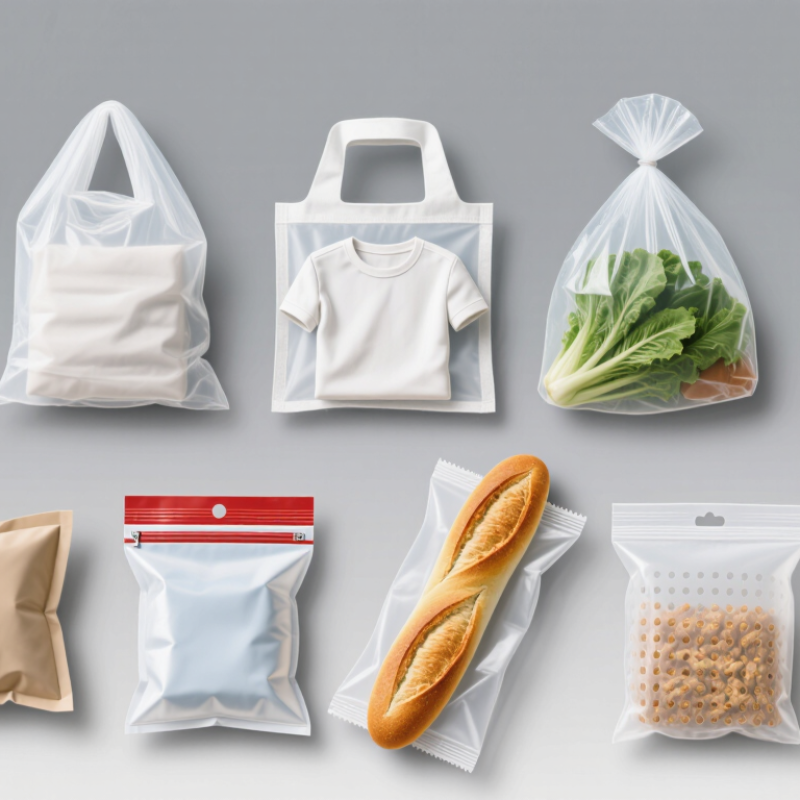
Plastic bag selection starts with the product, not the catalogue photo. A T-shirt bag suits quick retail checkout, while a die-cut handle bag gives folded clothing a cleaner presentation. Loop-handle bags carry heavier purchases comfortably. Flat bags work for lightweight items, and gusseted bags expand around boxed or bulky goods. Small details matter. Check handle strength, side-seal quality, and how the bag feels when loaded.
For food and household use, produce bags offer light, simple containment; zipper bags allow repeated opening; and stand-up pouches help products remain upright on shelves. Courier mailers protect soft goods during shipping, while refuse sacks need suitable thickness and puncture resistance.
OECD’s Global Plastics Outlook reports that global plastic production reached 460 million tonnes in 2019, and plastic waste reached 353 million tonnes. The report identifies packaging as the largest generator of plastic waste, accounting for 40% in 2019. These figures cover packaging broadly, not bags alone. That distinction is easy to miss. Buyers should compare bag size, material, closure, and intended reuse, then verify specifications with practical samples. No single format fits every supply chain, and this shortlist cannot replace testing.
How Each Bag Type Suits Different Products and Markets
Choosing a bag starts with the product, not the price. T-shirt bags suit lightweight groceries and busy checkout counters, while gusseted bags give boxed meals and bulky goods more room. Flat poly bags protect garments from dust; zip-seal bags help organize small parts and samples. For premium retail, paper bags carry a firmer shape, though they can struggle with moisture. Woven polypropylene sacks handle heavier goods such as grains or animal feed. Drawstring bags work well for sports kits and promotional items. Produce bags need ventilation when freshness matters. Mailer bags protect soft goods in transit, while compostable bags may suit markets with suitable collection systems. No single type fits every route.
Material choices have a wider impact. OECD’s Global Plastics Outlook reports that packaging generated about 40% of plastic waste in 2019. That figure makes right-sizing important: an oversized bag can waste material and raise shipping volume. Still, a lighter bag is not automatically the better choice if it tears and requires replacement. Test seams, handle strength, and moisture resistance with the actual product. Small trials help.
Tips: Match thickness to load weight, then test a filled sample over the real delivery route. Check local disposal options before specifying recycled or compostable content. Labels can sound reassuring; practical collection access matters more.
Key Differences in Strength, Reusability, and Environmental Impact
Top 10 Types of Plastic Bags for Global Buyers
Key Differences in Strength, Reusability, and Environmental Impact
Global buyers often compare T-shirt, drawstring, zip, produce, courier, garbage, vacuum, shrink, heavy-duty, and flat plastic bags. Each design serves a different handling condition. A thin produce bag may suit light vegetables, but it can fail under sharp edges. Heavy-duty bags usually use thicker polyethylene and resist tearing better. However, more plastic does not automatically mean better value.
In practical purchasing tests, I check load weight, seam strength, puncture resistance, and storage temperature. Reusable bags can reduce replacement frequency when users wash and store them correctly. This benefit disappears when a bag is used once. Recycled-content bags may lower demand for virgin resin, but their strength can vary without careful quality control. Small details matter.
Environmental impact depends on material, thickness, transport, collection, and local waste systems. Compostable bags are not a universal solution. Many require controlled industrial composting, not a household compost bin. Laminated or mixed-material bags may protect products well, yet recycling becomes difficult. I once treated thickness as the safest choice; that judgment was too simple. Buyers should request test data, recycled-content evidence, and disposal guidance. Local regulations also need checking before shipment.
How to Choose and Source the Right Plastic Bag for Your Market
Global buyers should choose plastic bags by use case, not by appearance or unit price. Common options include HDPE grocery bags, LDPE mailers, PP woven sacks, zip bags, vacuum pouches, barrier bags, and refuse sacks. Each serves a different need. A thin LDPE bag suits soft goods, while a reinforced PP sack handles heavier products. Moisture, puncture risk, sealing temperature, and transport distance should guide the specification.
Data makes the decision more urgent. The OECD’s Global Plastics Outlook reports that global plastic waste reached 353 million tonnes in 2019, double the 2000 level. Packaging generated about 40% of that waste. Therefore, buyers should request recycled content, downgauged designs, and clear end-of-life information where practical. Compostable bags need careful verification. Claims should match recognized standards and local disposal facilities, not just supplier wording. It is easy to overestimate the value of a “green” label.
Ask suppliers for test reports covering tensile strength, tear resistance, seal performance, and migration safety when relevant. ISO 18606 can support packaging recyclability and organic recycling assessments, but local rules still control market access. Review packaging taxes, labeling, extended producer responsibility, and food-contact requirements before ordering. Always test samples with real products and warehouse conditions. A low-cost bag can fail during humid shipping. That mistake is expensive. No option is perfect. The difficult question is whether the chosen bag fits the market’s actual collection and recycling system.
